
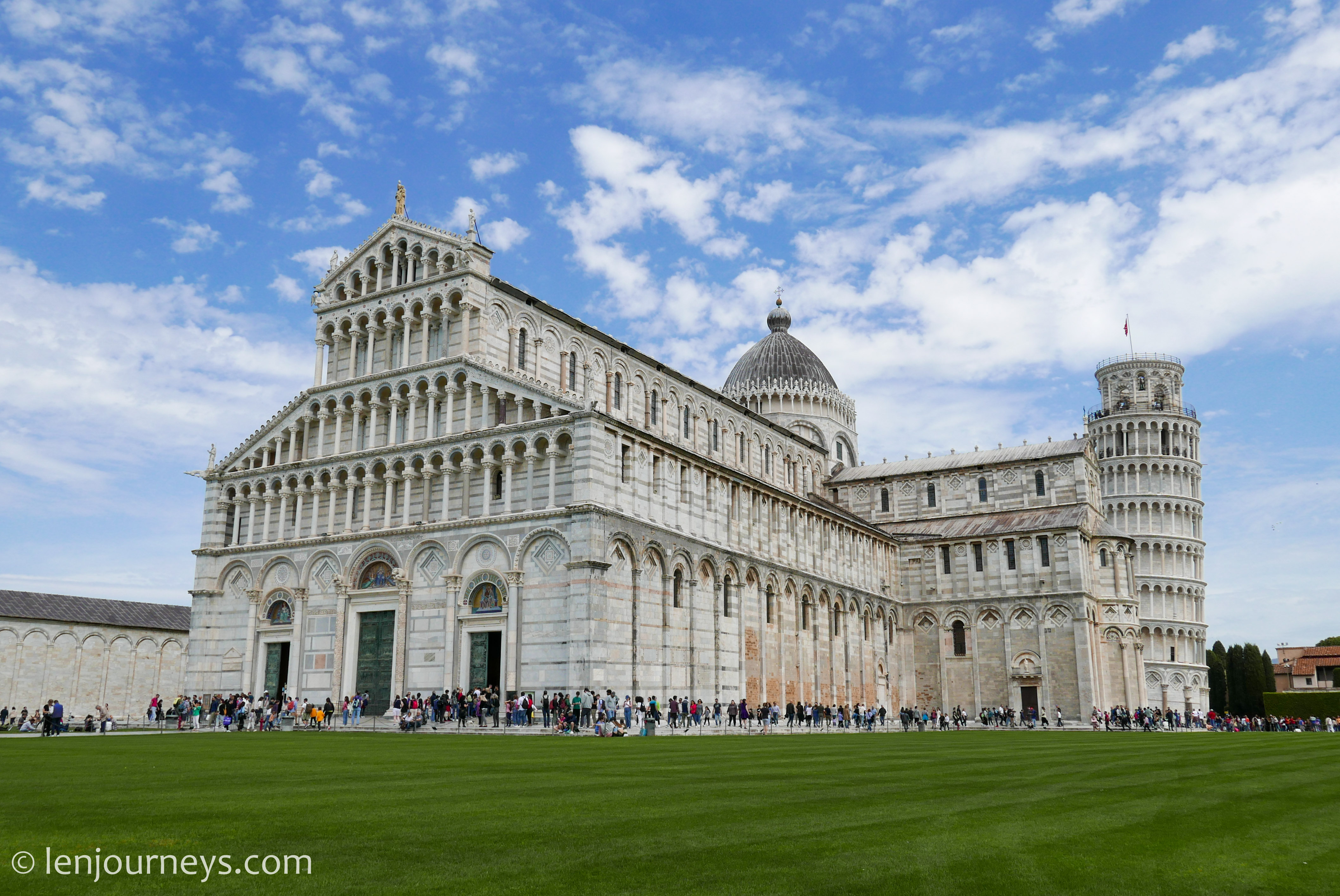
Compact yet compelling, Pisa draws visitors with Italy’s most signature sight – the Leaning Tower. The iconic white tower is one of the many marble-clad wonders that define Pisa’s golden age, when this city was a maritime power rivaling Genoa and Venice.
Positioned at the mouth of the Arno River, Pisa – which means ‘estuary’ in Estrucan language – has been a significant port since ancient times. It first served as a Roman naval base before being fortified into a maritime city in the 1st century BC. Throughout the early Middle Ages, Pisa’s importance remained unchanged, with its fleet expanding and the city itself becoming a major trade center between Tuscany and the Tyrrhenian Sea.
Major successes in the First Crusade (1096 – 1099) brought lucrative benefits to Pisa – by then an independent maritime republic, with commercial ties being established across the Mediterranean and the Middle East. The good times rolled on into the 12th and 13th centuries, with Pisa exerting direct control over the immediate coastline, Corsica, Sardinia, and the Balearic Islands. Its influence extended as far as Constantinople and, at times, even surpassed that of the Republic of Venice.
This economic expansion brought Pisa into conflicts with other Italian maritime powers, particularly Genoa. The two city-states engaged in a series of naval battles, but it was not long before Genoa emerged as a clear victor. The decisive defeat at Meloria in 1284 marked the end of Pisa’s domination of the high sea. It never fully recovered and was eventually annexed by its Tuscan rival, Florence, by the early 15th century. Under the Medicis, Pisa re-established itself as a center of science and education. It remains so to this day, with Pisa University being one of Italy’s most prestigious institutions.
Though the golden age of Pisa has long gone, memories of Pisa as a maritime power are still well preserved in the magnificent monuments of the Piazza del Duomo. The whole complex, including the Leaning Tower, is a prime expression of the distinctive Pisa Romanesque style, featuring layers of columns, arches, and geometric patterns of colored marble.



1. Pisa Leaning Tower
Standing stilt on a vast walled plaza, with expanses of green lawn between the paved areas, the Leaning Tower is Italy’s most recognizable sight today. Yet in the 12th century, it was planned simply as a free-standing bell tower, crafted from stone and marble. The Romanesque tower took nearly two centuries to complete. It measures approximately 56 meters in height, and features seven floors and a set of seven bells atop. The tower’s unusual 3.97-degree incline was, however, not intentional, but rather an architectural mishap dating back to the early stages of the construction.
Pisa’s crown jewel took 199 years to complete.
Due to the weak foundation on soft ground, the towering icon began to lean after only three floors had been built. Earlier attempts were made to compensate for this tilt. For example, the top floors were built with one side taller than the others, curving in the opposite direction of the lower floors to straighten the tower out a little. Nevertheless, the gradient continued to rise over the years until an extensive stabilization project was carried out in the 1990s. The lean was reduced from 5.5 degrees to around 4 degrees, making Pisa’s crown jewel structurally stable for years to come.
Despite its engineering drawbacks, the Leaning Tower is undoubtedly a masterpiece of masonry, reflected in intricate reliefs, diamond-shaped patterns, six marble colonnades, and capitals with floral motifs. The builders seemed to incorporate the finest of Romanesque architecture and previous periods into the structure. Some Gothic elements were later added as well, most notably the belfry, yet they are designed to harmonize with the tower’s overall style.
Good to Know: The Leaning Tower is associated with the laws governing the falling bodies formulated by the Pisan scientist Galileo Galilei (1564-1642). In his experiment, Galileo dropped two balls of the same material with unequal weights from the top of the tower to demonstrate that their time of descent is independent of their mass.


2. Pisa Cathedral
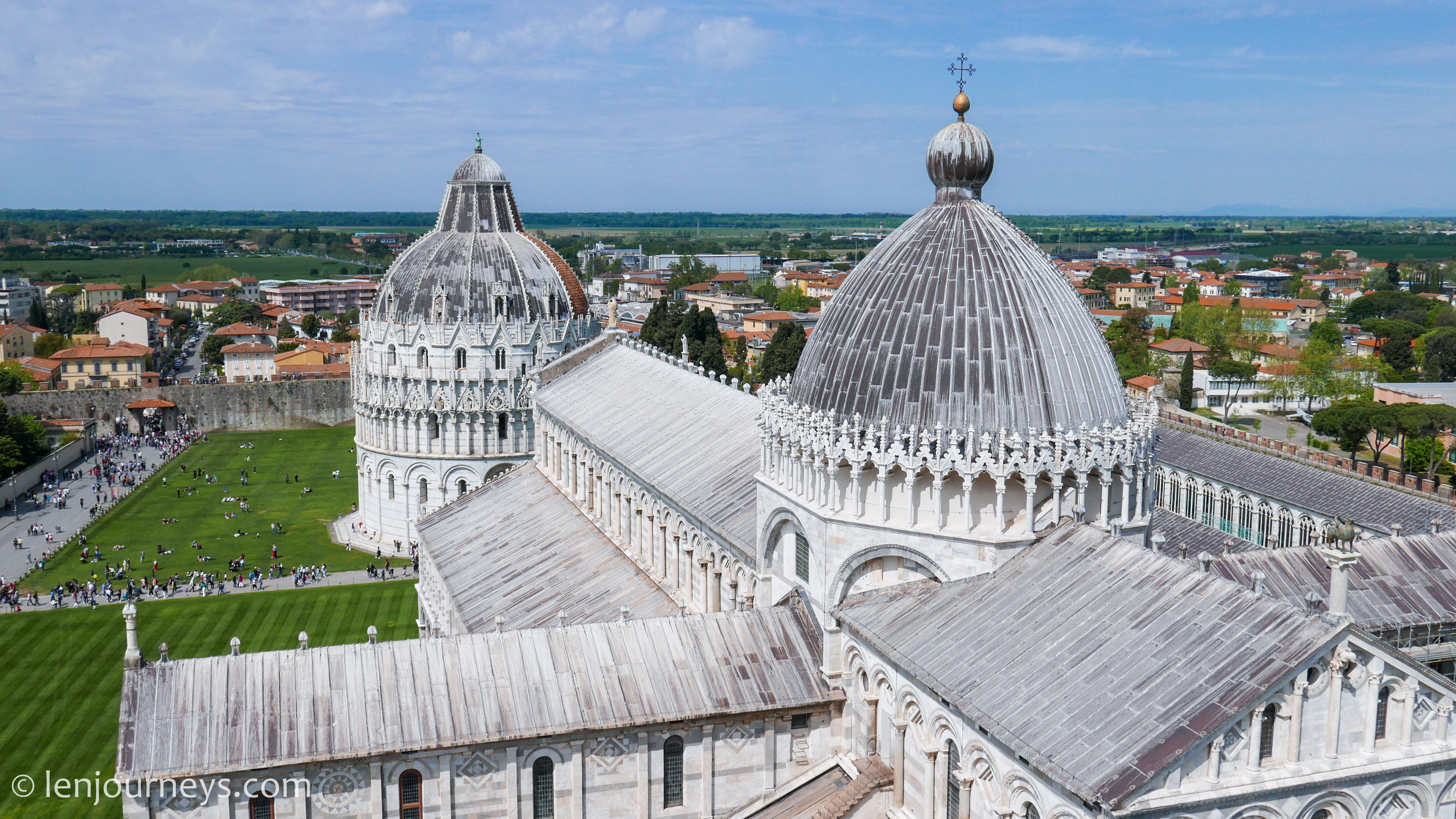
The Leaning Tower might steal the spotlight, but the pièce de résistance of Piazza del Duomo has always been the Pisa Cathedral. Erected in 1064, the cathedral was the first architectural wonder built to showcase the prowess of the maritime republic. It was financed with rich spoils from a naval battle against an Arab fleet off Palermo just one year ago. And at the time of its completion (1092), it was the largest in Europe.
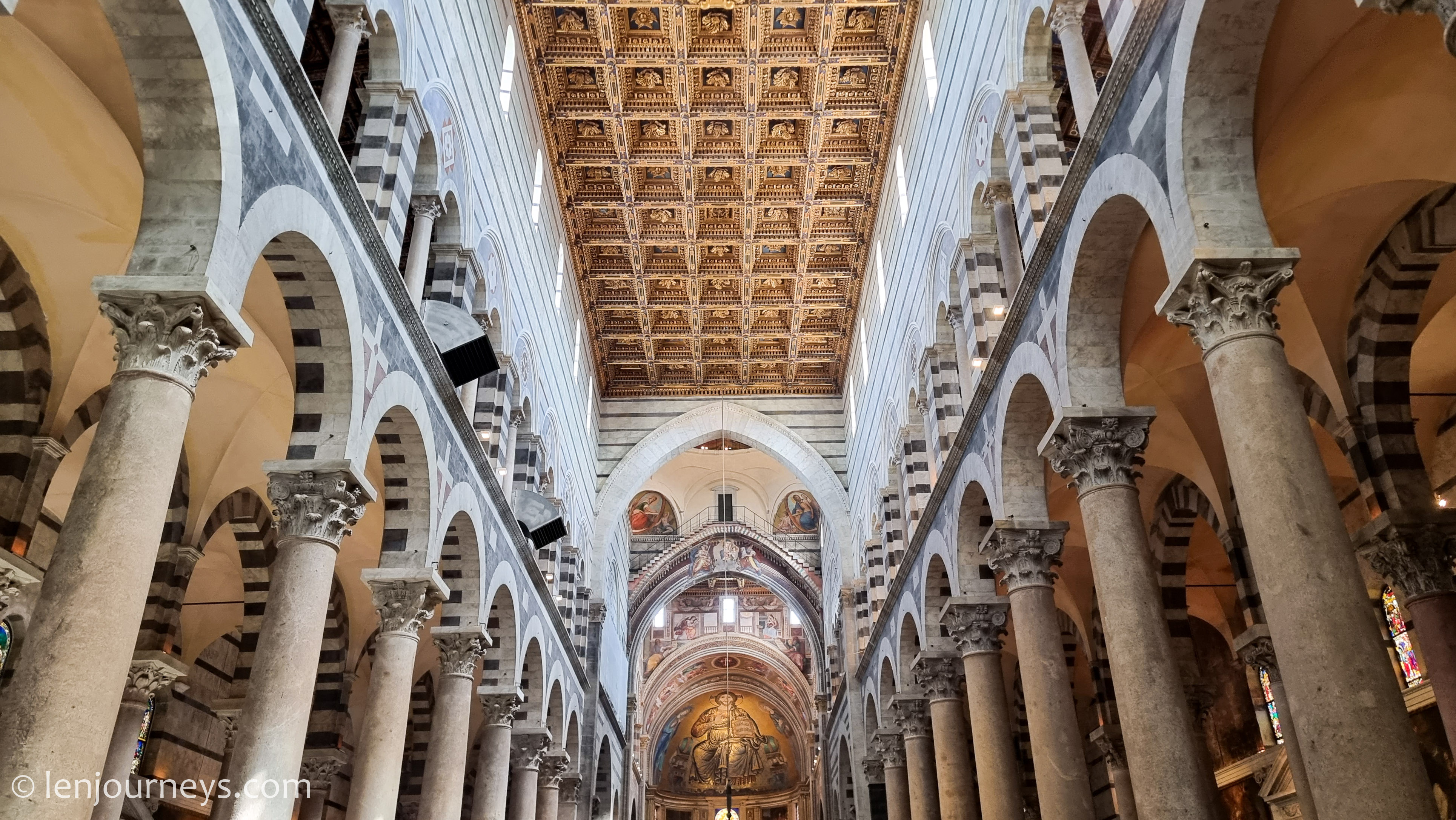
Every detail about Pisa Cathedral is extraordinary, from the grey-and-white facade with four layers of arched columns diminishing skyward, the soaring interior capped by a 24-carat gilded wooden ceiling, to the interplay of polychrome marble and mosaics throughout the site. An elliptical dome, inspired by the Moors, tops the cathedral. It added shape and color to a monument considered an artistic leap and later a blueprint for other Romanesque churches in Tuscany.
Good to Know: Galileo Galilei also discovered the physics of the pendulum when observing the bronze chandelier in the Pisa Cathedral. He found out that the period of a swing is approximately independent of its amplitude. This became a prelude to his pioneering work on dynamics.




3. The Baptistery
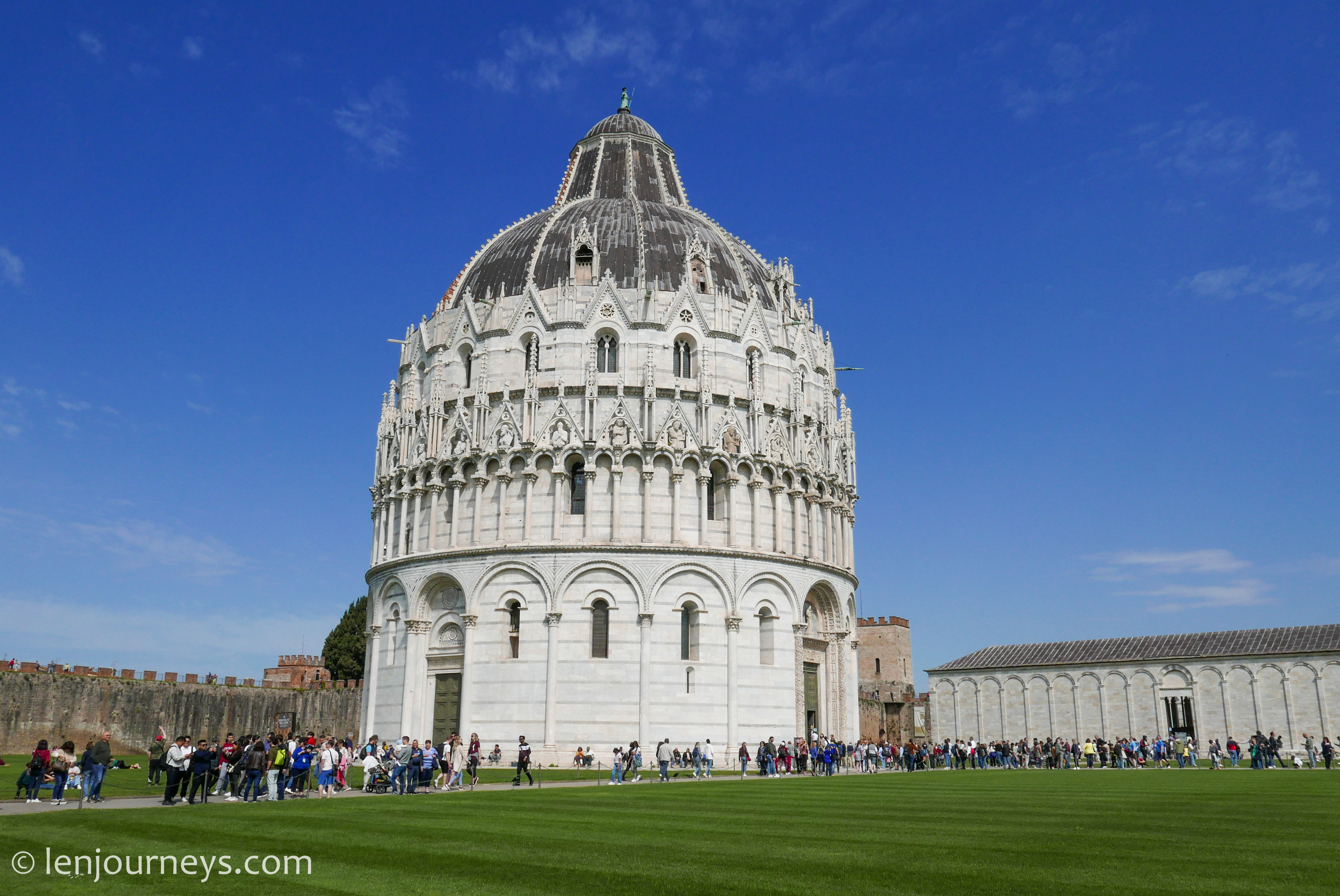
Right next to the cathedral, the Baptistery is an outstanding example of Pisa’s stylistic transition from Romanesque to Gothic. The construction began in the mid-12th century, but it wasn’t completed until 1363; by then, Gothic architecture had already swept over Europe. The lower section, therefore, features Romanesque elements, including round arches and simple geometric patterns. Meanwhile, the upper part is richly adorned with elaborate figures, floral decoration, and a series of ornamental gables. Another interesting aspect is the dome, which is half red and half grey due to the use of terracotta and lead sheets for tiling. Rumors said it indicated the lack of funds, but it could also reflect the artistic adjustment taking place during construction.
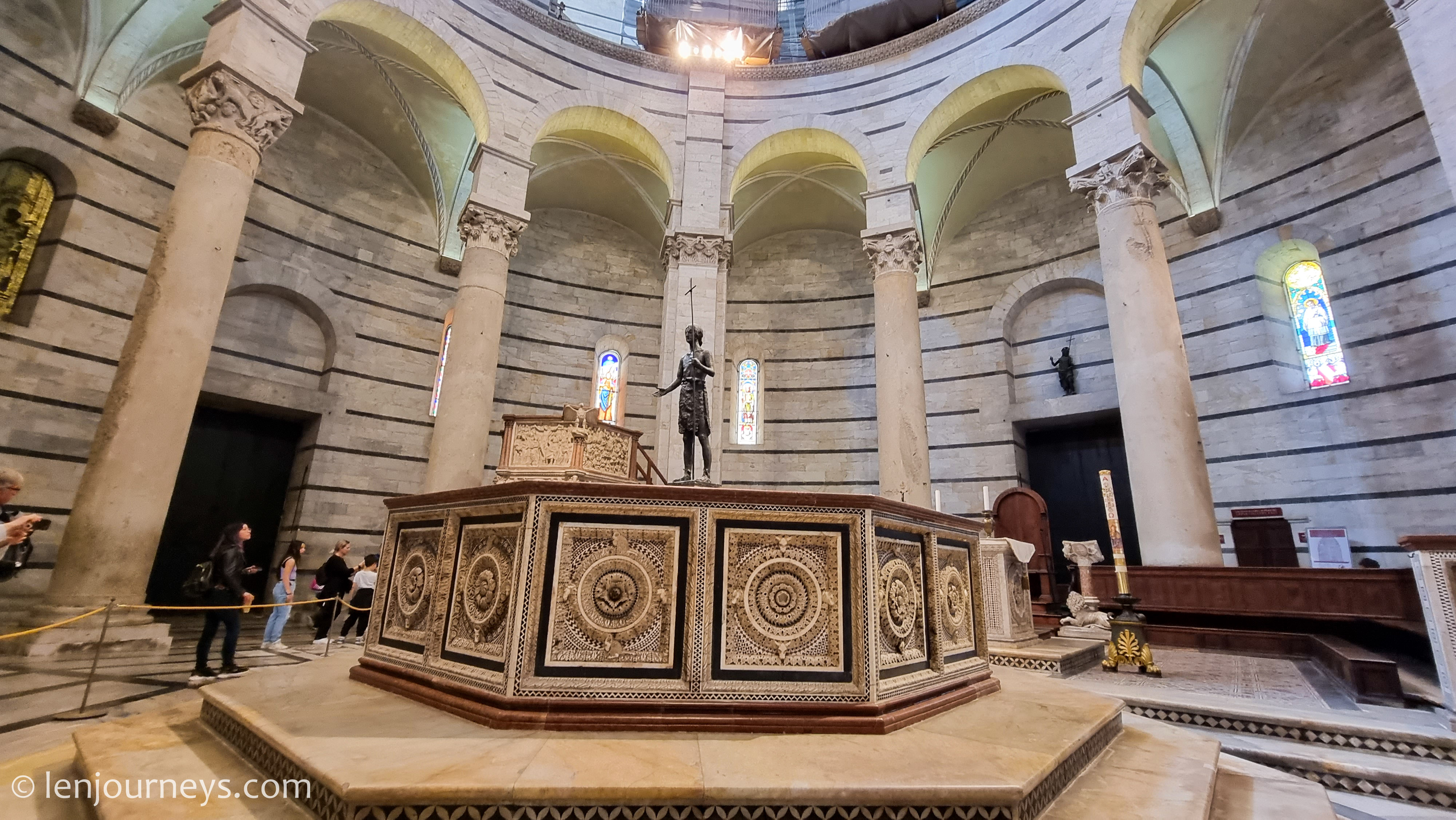
Contrary to the lavishly ornate exterior, the Pisa Baptistery’s lofty interior is surprisingly plain and austere, consisting of eight monolithic columns that surround a large octagonal marble baptismal font. It’s a precious treasure, decorated with exquisite mosaics and floral motifs. A bronze sculpture of St. John stands at the center of the font, giving the structure its official name: the Baptistery of St. John. The nearby pulpit is no less impressive, standing on seven columns and being carved with scenes from the Life of Christ. Curiously, in this work, the Christian virtue of fortitude is represented by the nude Hercules. This peculiar depiction is considered one of the earliest precursors of the Italian Renaissance, which flourished later in Florence.


4. Campo Santo
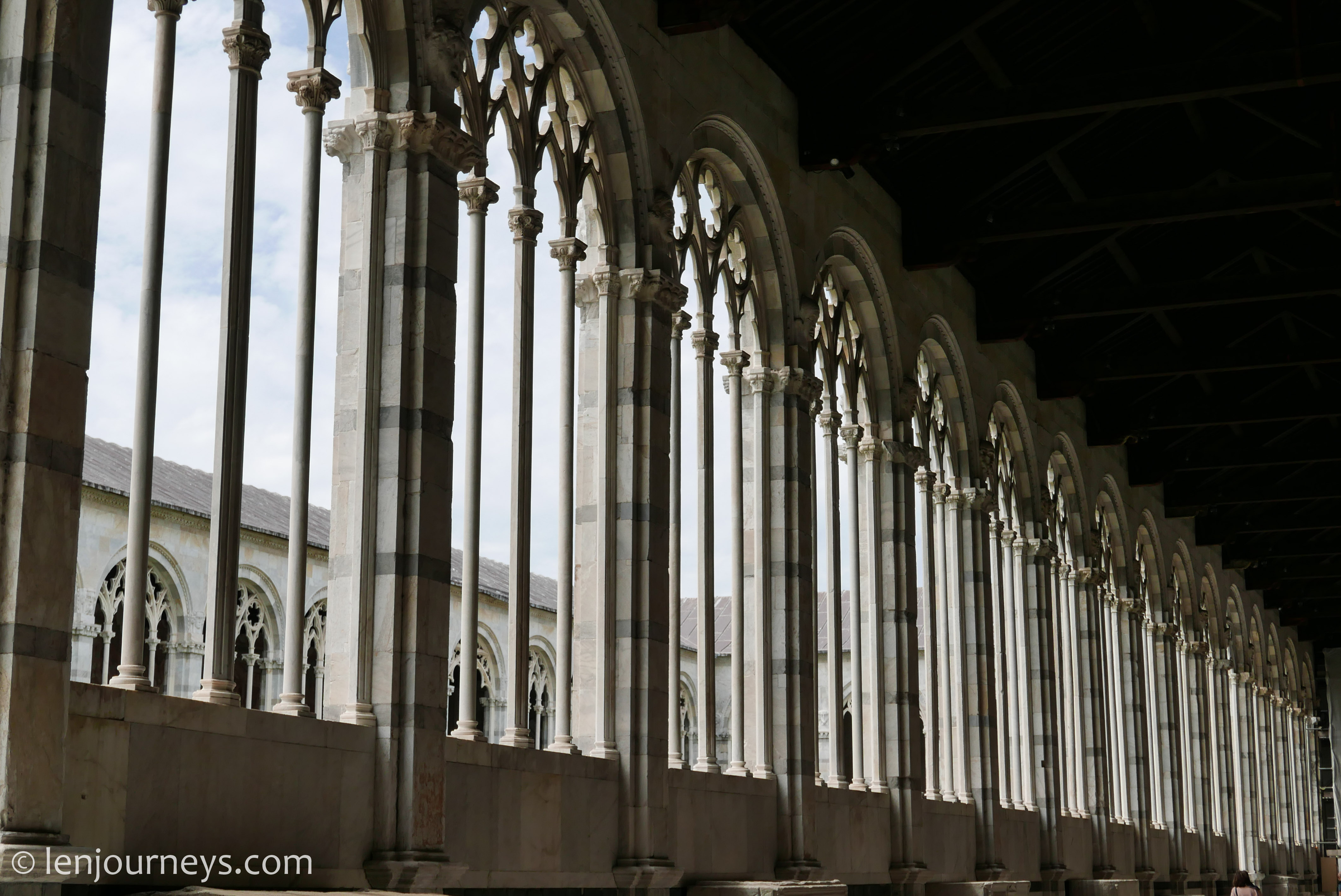
Lining the northern edge of the Piazza del Duomo is the oblong grey wall with 43 blind arches of Campo Santo, once the burial ground of the Pisan elites. It’s the last monument to be erected on the plaza, and according to legend, it was built around the sacred soil from Golgotha, brought back to the city-state during the Third Crusade (1189 – 1192). The cemetery was completed in 1464, featuring a Gothic cloister adorned with bar tracery and a dome-topped chapel where several sacred relics are safeguarded.
As the ‘Holy Field’, the Campo Santo contains a collection of sarcophagi and funerary objects belonging to Pisa’s most illustrious families, guilds, and clergy. Most are intricately decorated and located under the arcade, while a few are on the central lawn. But what makes this cemetery truly unique is its magnificent fresco cycle on the inner walls, depicting Biblical scenes in vivid detail and colors. The paintings were severely damaged at the end of World War II, but they have now been fully restored.
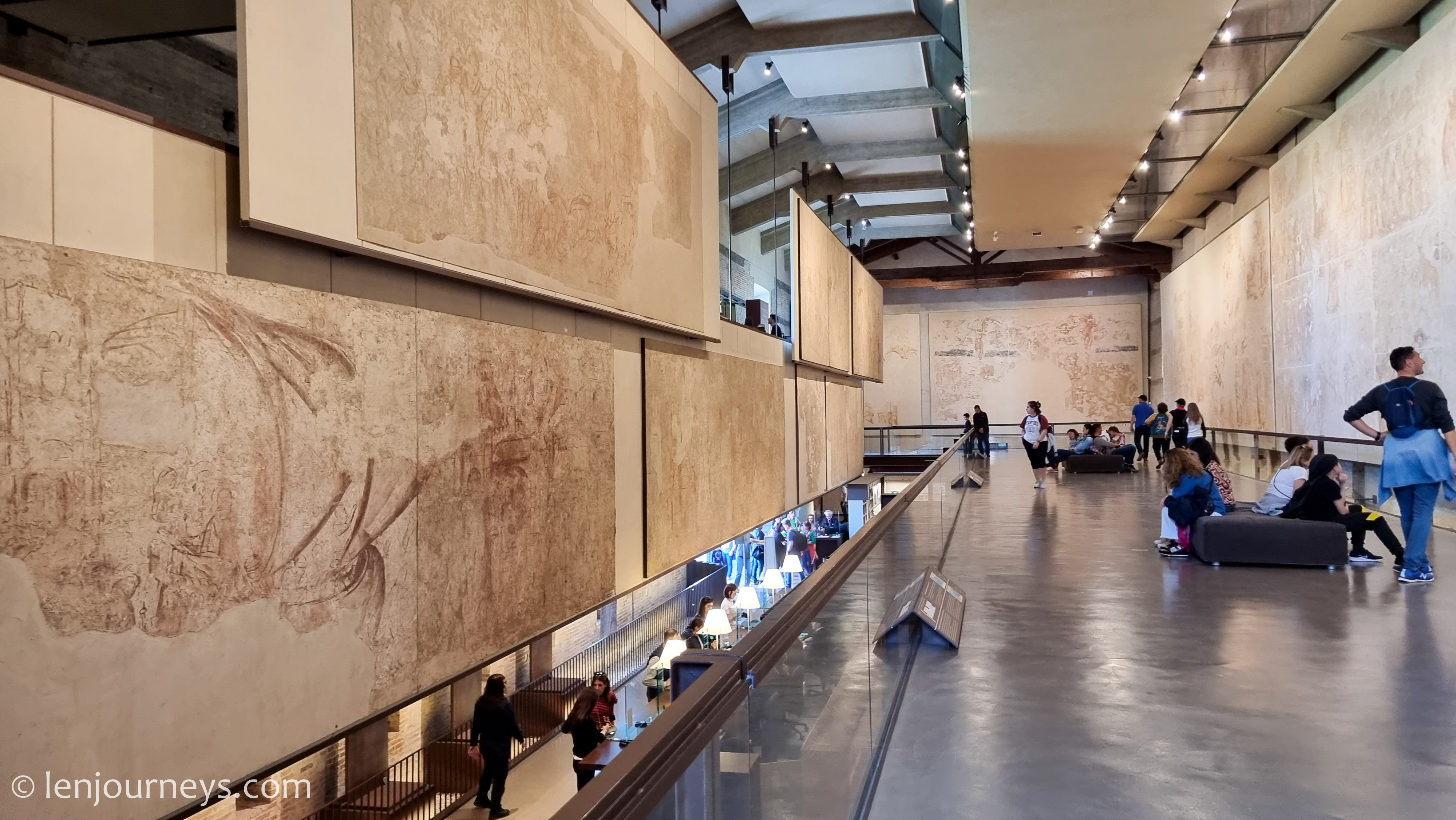
Good to Know: The sinopites, or preparatory drawings for the vast frescoes, are now on display at the nearby Museo delle Sinopie. They were revealed when the Campo Santo was ravaged by fire in 1944. These works represent the first phase of the painting process, and are particularly rare as they are never meant to appear.




5. Pisa Old Town
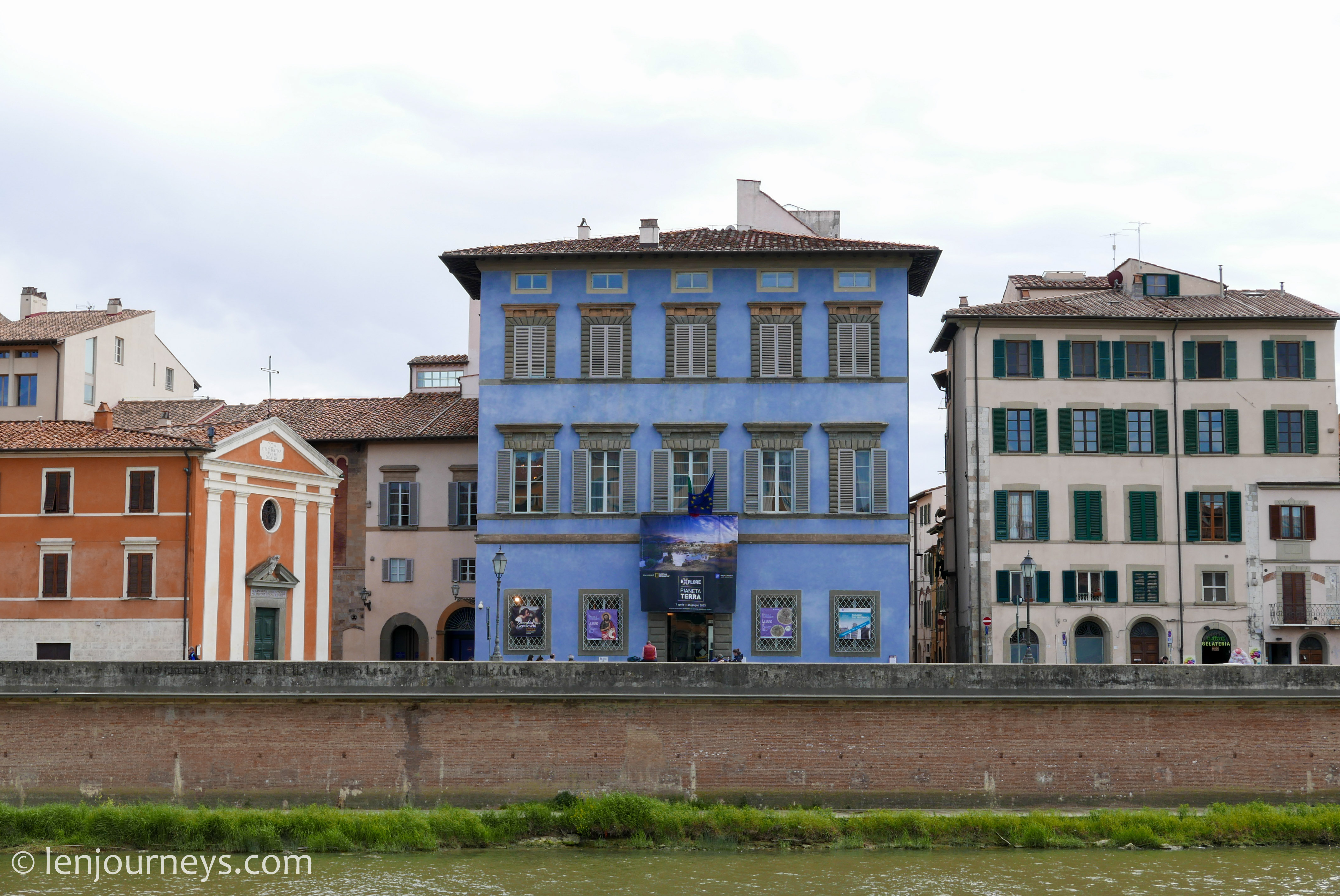
Beyond the Piazza del Duomo lies the enchanting medieval town of Pisa – an assembly of cobbled lanes, churches, well-maintained houses, and Renaissance palaces straddling the Arno River. Most of the buildings have warm tones such as orange, ochre, and pastel pink. Only the Palazzo Blu, a riverside palace that transformed into an art museum, stands out with its azure-blue exterior.
Another remarkable site is the 14th-century Church of Santa Maria della Spina. Its name comes from the fact that a thorn, or spina, from Christ’s crown was once preserved here. The Gothic church resembles a marble jewelry box: tiny yet beautifully adorned with sculptures, pointed arches, and delicate spires. It sits on the riverbank, creating stunning reflections in the water below.
Good to Know: There are lovely walks along the river, offering respite from the massive crowd of Piazza del Duomo and showcasing the local life.



Tips for Visiting Pisa
- It’s recommended to arrive or depart using Pisa Centrale, located on the southern edge of the old town. This way, you can casually explore Pisa’s historic core while en route to the Piazza del Duomo. The walk from the station to the monumental complex takes about 30 minutes (without any stops).
- For those short on time or who only want to visit the Piazza del Duomo, San Rossore Station is a better choice.
- To ensure a visit to the tower and avoid the long queue, buy the tickets online in advance at Opera della Primaziale Pisana. They are on sale up to 20 days in advance. Tickets can be purchased separately (€20) or as a combo (€27), which covers admission to the Baptistry, the Camposanto, and the Museo della Sinopie.
- A ticket to the tower is time-slotted, as only 40 people are allowed to enter at a time. A visit usually lasts 30 minutes and involves a steep climb up, with nearly 300 narrow stone steps. Bags, including handbags, are prohibited inside the tower. They can be deposited at the free luggage desk next to the ticket office.
- Admission to the cathedral is free of charge, but you need to show a ticket for one of the other sights. Alternatively, you can obtain a free pass distributed at the ticket office at a fixed time.


This is not the first blog post I’ve read about Pisa, but your travel stories from this Italian city certainly made it a lot more appealing to me. I love reading about how powerful Pisa was, and how later it emerged as a center of education. I’m particularly intrigued by the sinopites.
Same here. I thought Medieval artists drew and painted directly on the wall. Didn’t know that they had to create a full and detailed sinopite first. Thanks for the nice comment, Bama 🙂